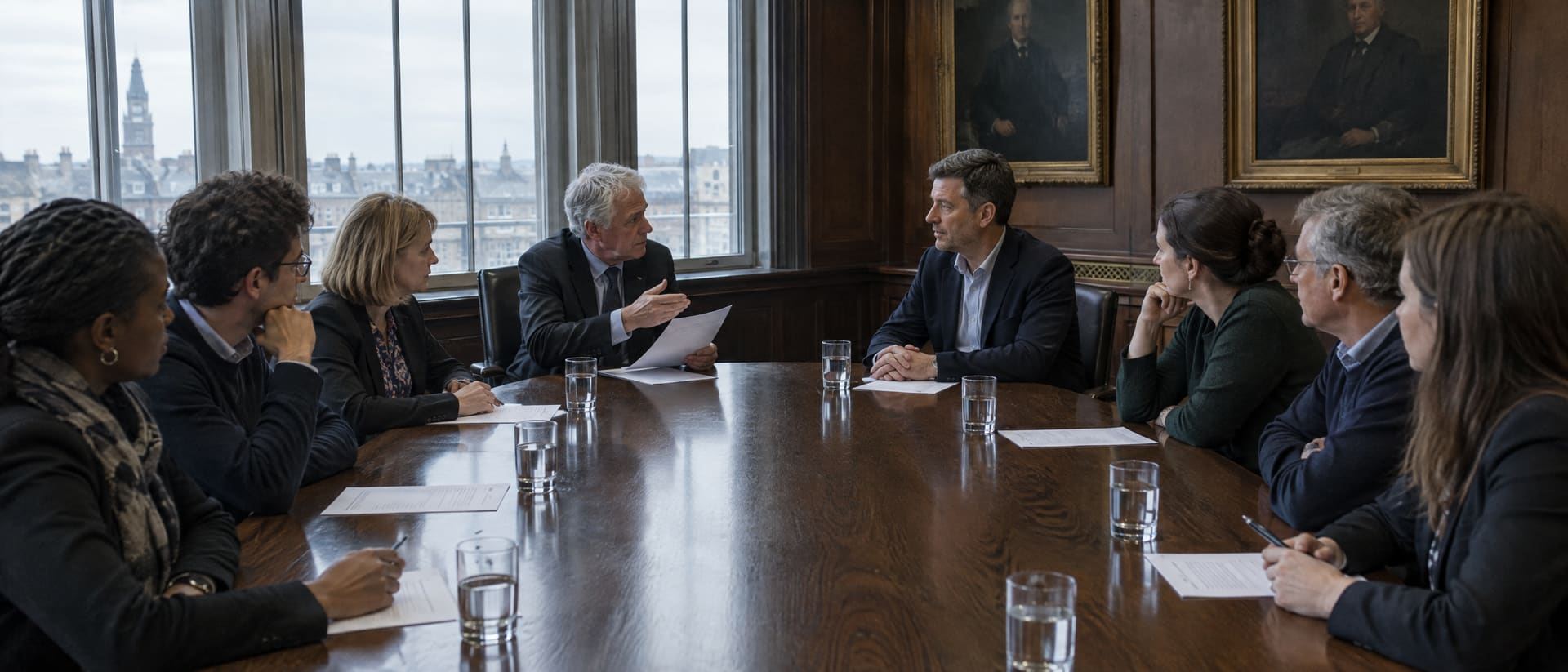
These five problems are found in many organising committees, including experienced ones. Each of them can turn a forecast surplus into a loss in the last weeks before the event. Below is each problem, and what the system does about it.
The obligation exists on paper, but the money it will cost is not in any number the leaders read.
In Major Event OS: a contract is a source. Its obligations become projects. A project with money gets a budget line. When the contract is signed, the signed sum goes into that line the same day.
Someone buys something reasonable, but nobody can say which part of the plan it is for, so nobody can say whether it was planned.
In Major Event OS: every budget line has three codes: account, program, project. A line without a project cannot be saved.
Infrastructure the city funds, a partner's promise, an in-kind deal. It drops out of the budget and nobody follows it.
In Major Event OS: every project has a budget role: cost, income, both, none or external. External work is tracked too.
Contingency is hidden inside budget lines, so it gets spent twice and counted once.
In Major Event OS: the reserve is shown in three parts in the monthly report: contingency as a share of the approved budget, the expected cost of open risks, and the margin in income.
The budget is approved once and then reported as the forecast until the end.
In Major Event OS: five numbers on every line, every month. The expected total cannot drop below what is already signed. Save the month, and the next report shows the change.
Not after the event. That is the reason this system exists.
The system keeps the work in this order. Each step is a screen. Nothing in the monthly report exists without the steps before it.
A contract clause, a law, an operational need, a strategic goal. Registered with a code and a reference to the exact clause.
Coded (basket, program, project), with its source. A draft until it is confirmed. Only confirmed work gets money.
The owner, the accountable executive, the party that delivers and the party that pays. If there is no owner yet, it is marked unassigned. It cannot be left empty.
Quantity times price. Three codes: account, program, project. Key numbers such as participants or days update every line that uses them.
The signed sum is entered on the day the contract is signed. The expected total cannot drop below it.
Approved. Committed. Spent. Still to come. Expected at completion. On every line, added up by program and for the whole event.
The five numbers and how they changed, the dates that slipped, the risks in money, the decisions to make.
Approved. The budget the board approved. It changes only by a decision.
Committed. What is signed. It goes up when a contract is signed and does not quietly go down.
Spent. What has been paid, according to accounting.
Still to come. The estimate of the rest, updated every month.
Expected at completion. Spent plus still to come, never below committed. The difference to approved is what the board has to decide on.
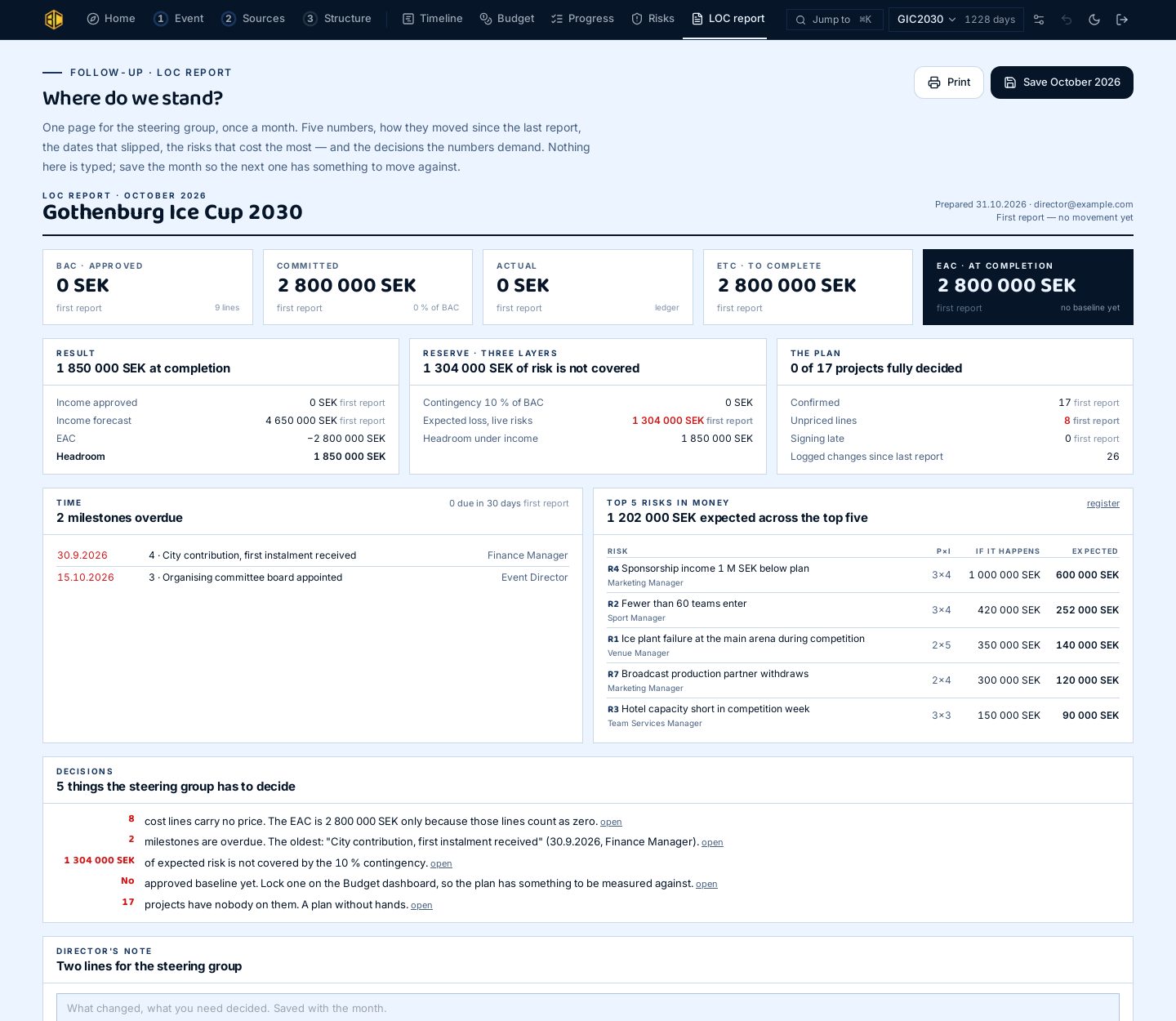
Probability times impact, next to the expected total. The five most expensive go into the monthly report.
Every change after confirmation asks for a reason and is logged. Undo is one click.
A project shows the worst status of the work under it. Late is late. Rows nobody has updated are flagged.
Rights holder, contract, law or leadership. A milestone that slipped stays visible with its note.
Work you decided not to do is written down. Bringing it back is a new decision.
Teams, participants, volunteers, fees, days. Change one and every budget line that uses it changes too.

Two ways to start. Answer twenty questions and get a plain result, or book a 45-minute demo with Jesse on your own event.
Pricing starts at €497 a month.