
For the people who lead major events with confidence.
Pricing starts at €497 a month.
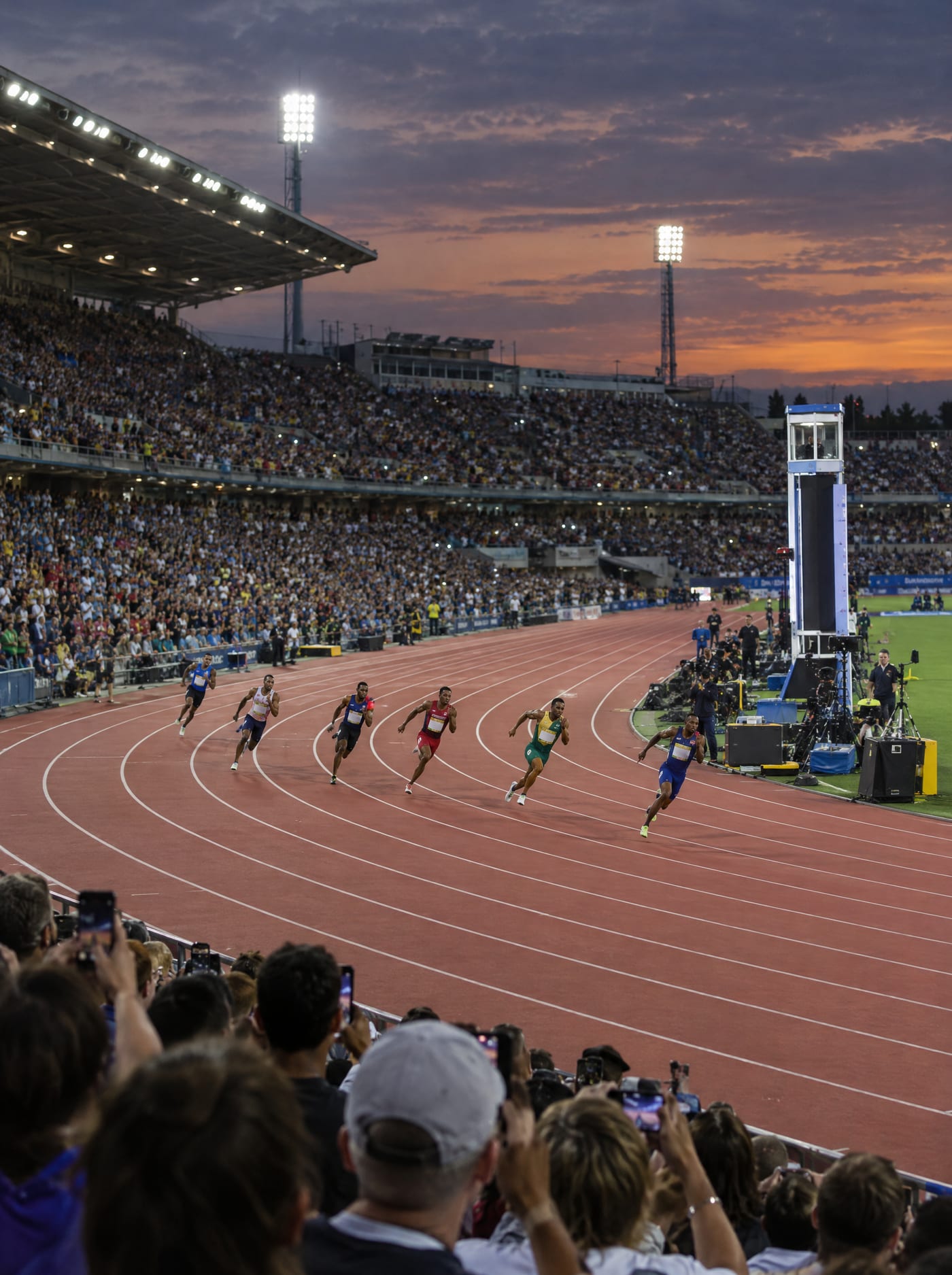
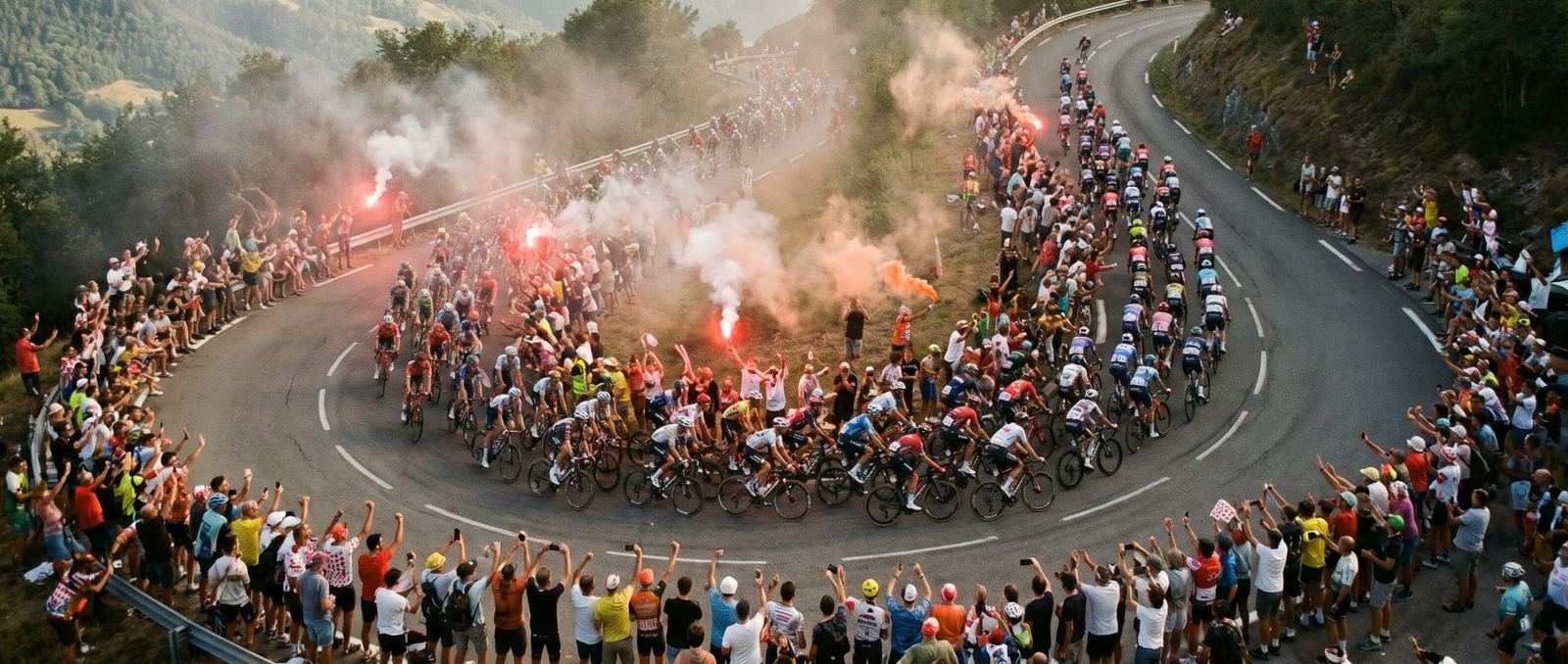
Experienced people, public money, serious boards. The auditors found the same causes in the organising, again and again.
Three weeks before the opening, the forecast showed a surplus of NOK 15.1 million. The result was a loss of NOK 43.9 million. Projects, contracts and the budget were in separate files.
Planned to make €68 million. Expected result: a loss of €13.9 million. Spending ran 31 % over the first budget.
Planned at PLN 400 million, PLN 1.7 billion of public money spent. The final list of sports and venues was fixed two days before the Games.
The organising committee reports a deficit of about €310 million. Costs about €230 million over plan, income €80 million under.
The first budget was built from desktop research on what earlier Games cost. The Games were cancelled after AUD 589 million had been spent.
Every one went over budget, by 159 % on average (Oxford Olympics Study, 2024).
Sources: Trondheim performance audit 2026; Cour des comptes, April 2025; Polish Supreme Audit Office, 2025; Milano Cortina board figures, May 2026 (not final); Victorian Auditor-General, March 2024.
The people who lead a major event should know where they stand while there is still time to act.
That is why Major Event OS exists. How it stops the five most common budget problems →
The software keeps these rules in place, also in the busy months.
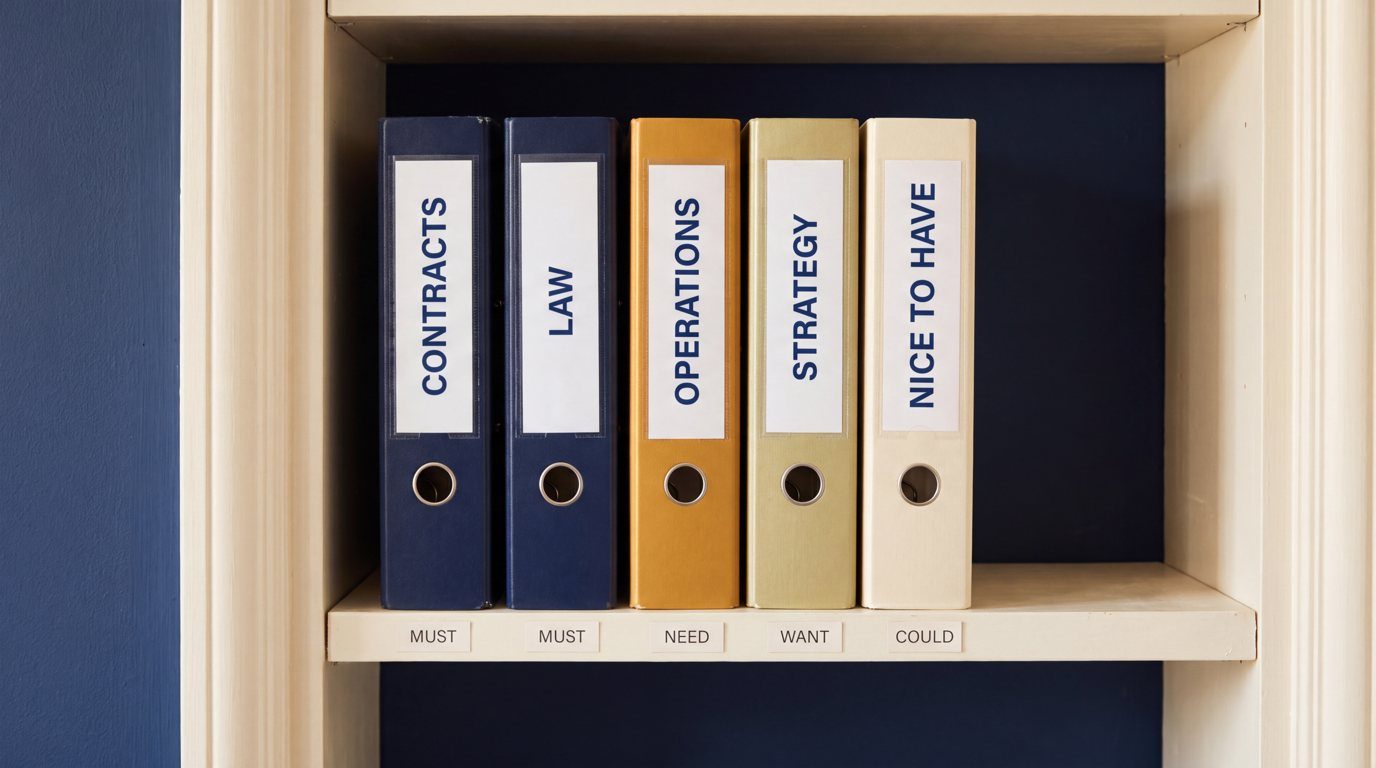
A contract clause, a law, an operational need or the strategy. The source sets the priority: must, need, want, could or won't. When people disagree about priority, you check the source.
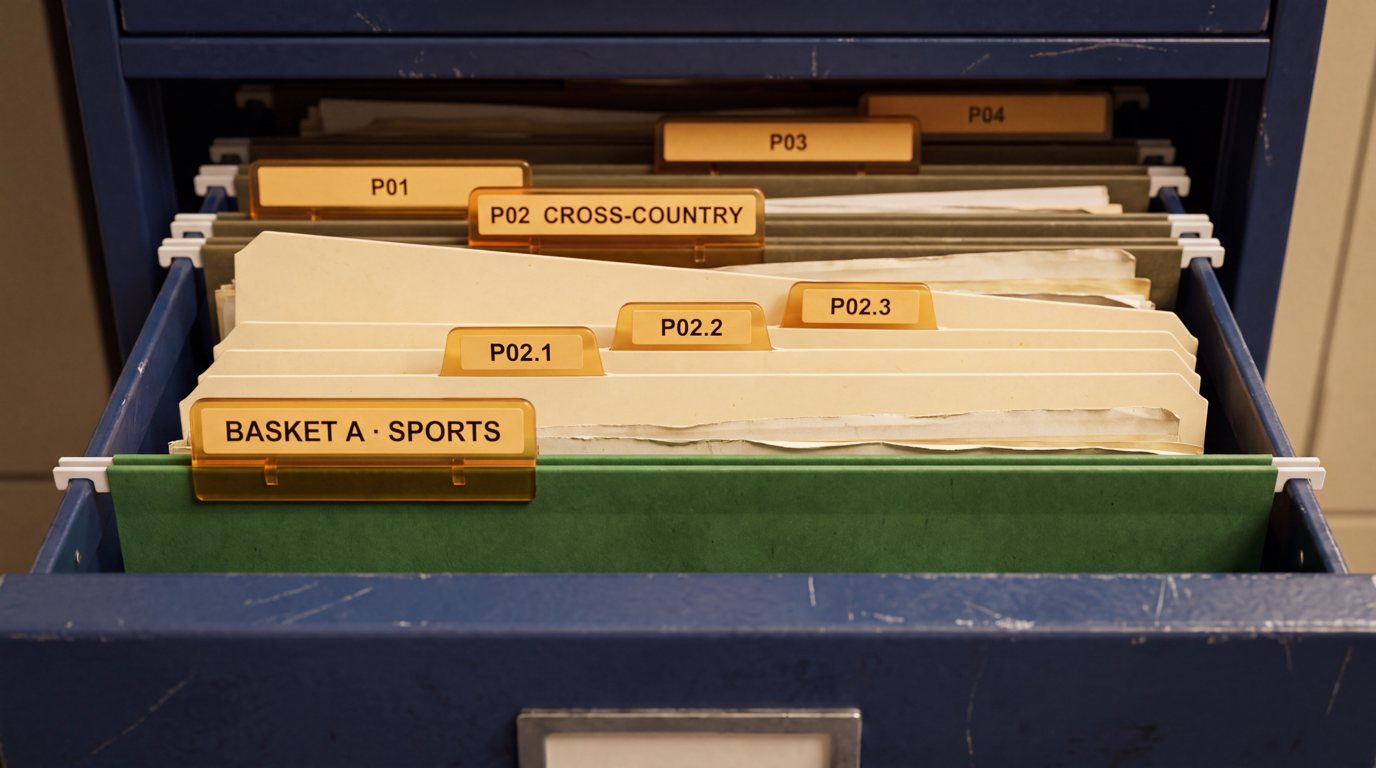
Basket, program, project: a letter, a number, a decimal, such as C2.3. Everyone knows who owns it, which contract it comes from and how much money it has.
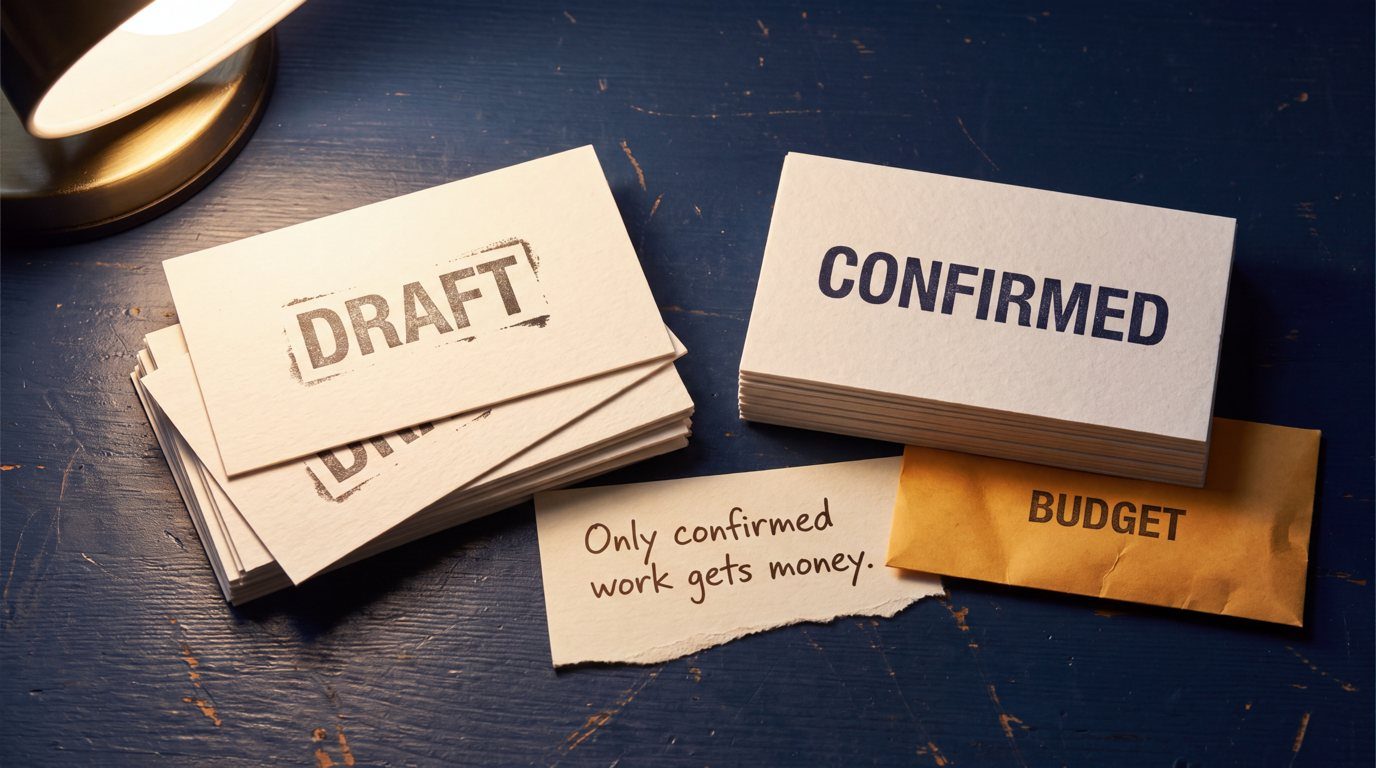
The budget is built from confirmed projects, line by line, quantity times price. When a contract is signed, the signed sum goes into the forecast, and the forecast cannot drop below it.
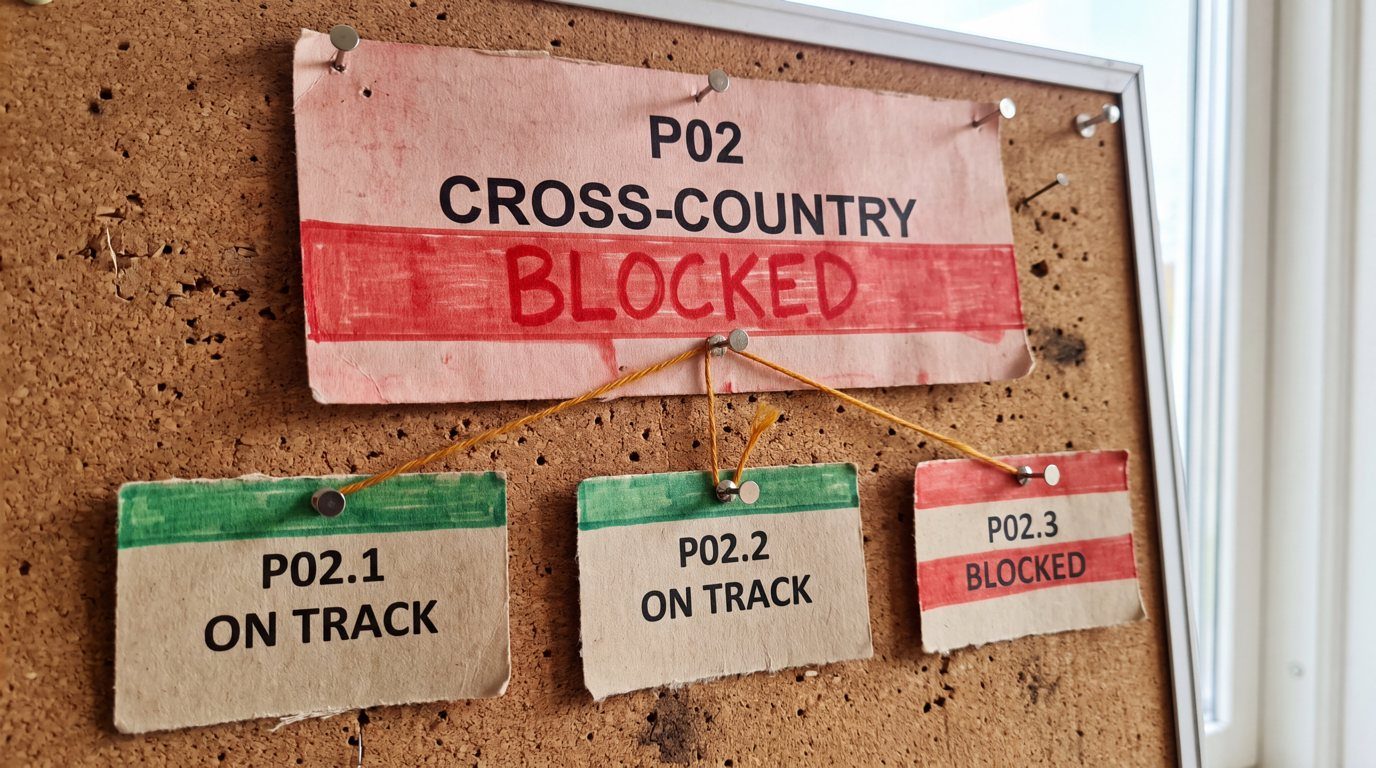
A project shows the worst status of the work under it. Late is late. Managers answer six short questions a day and the status updates itself.
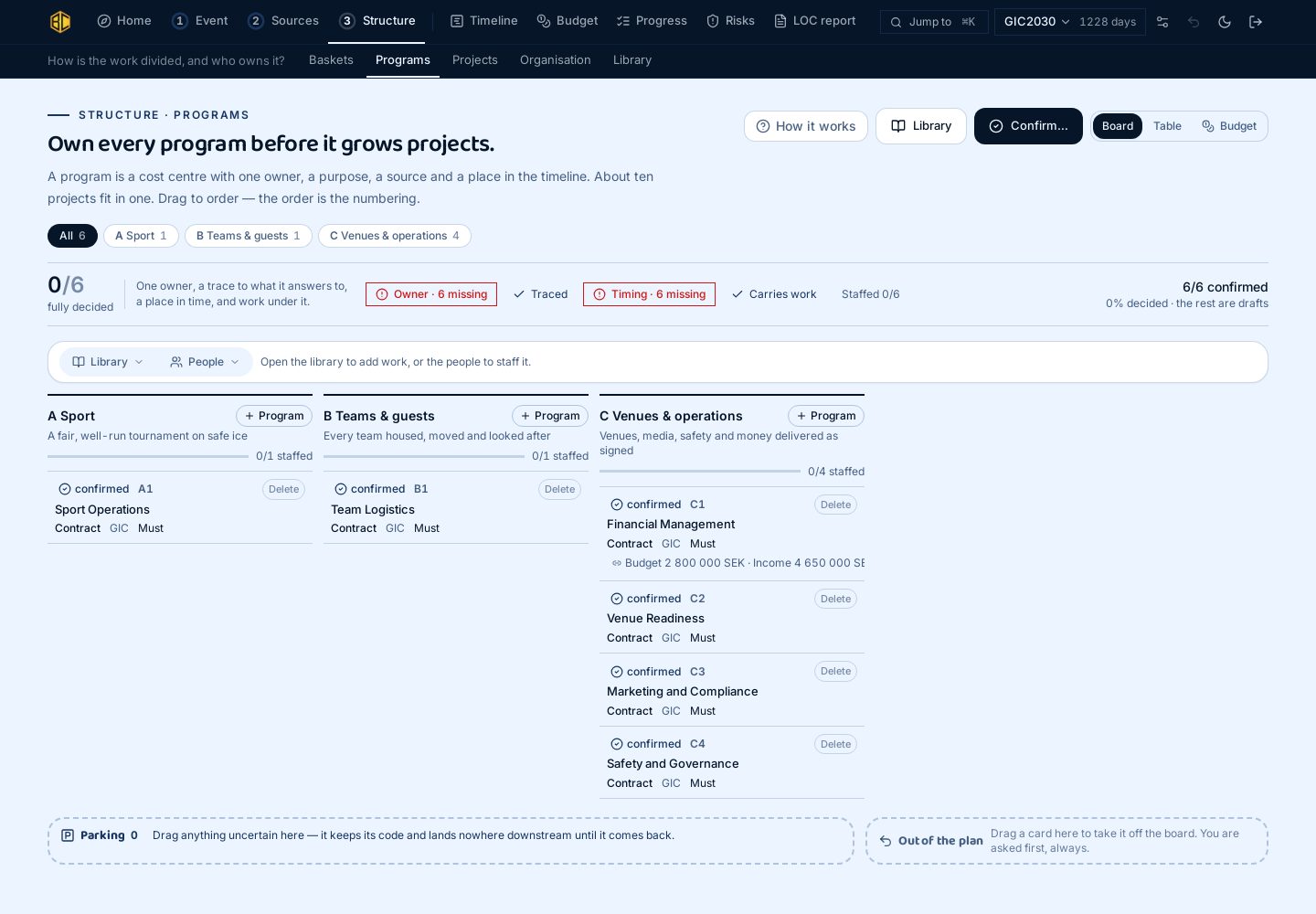
The menu follows the order of the work.
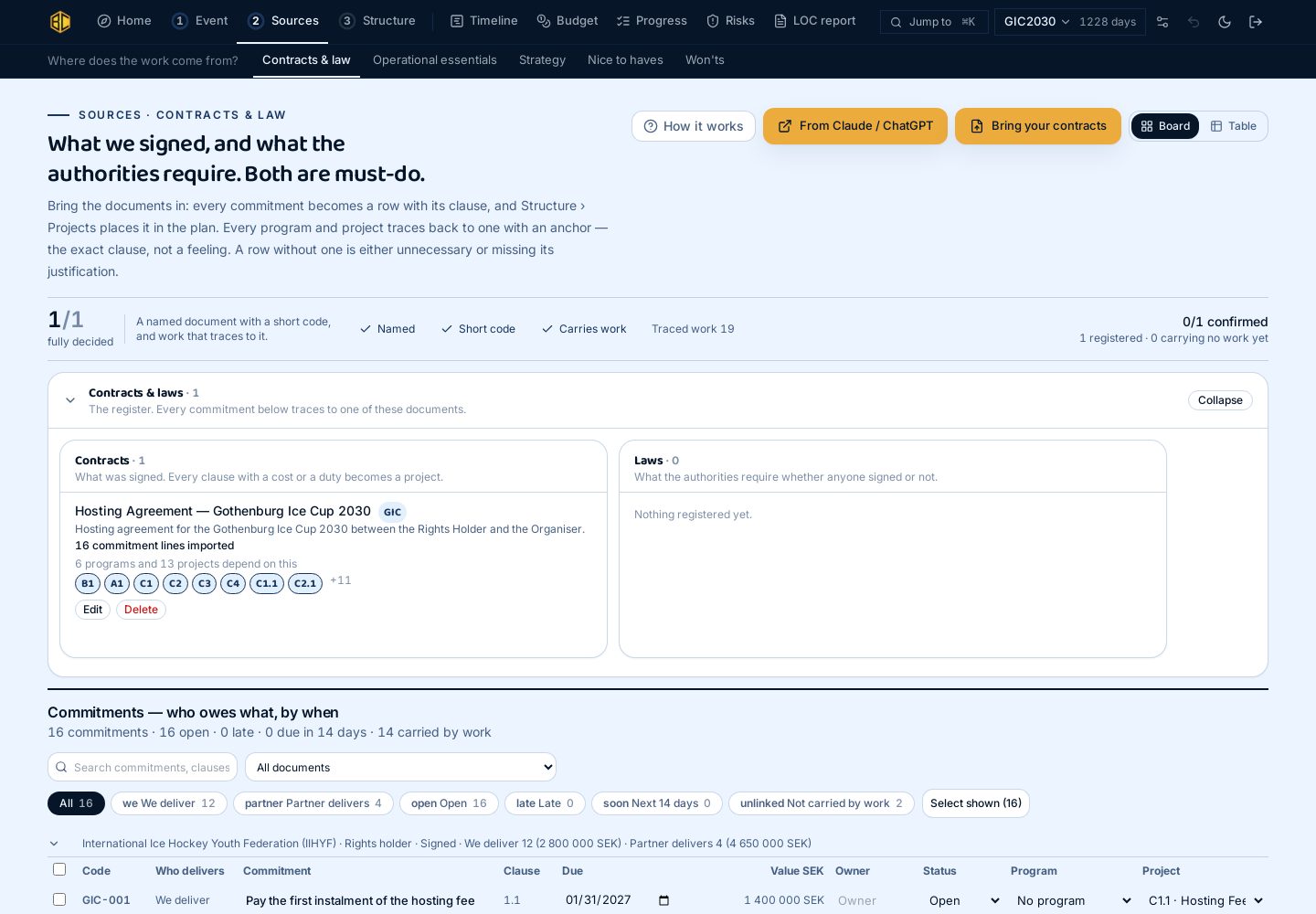
The event, its dates and the key numbers the budget depends on. The documents the work comes from. Baskets, programs and projects, each with an owner.
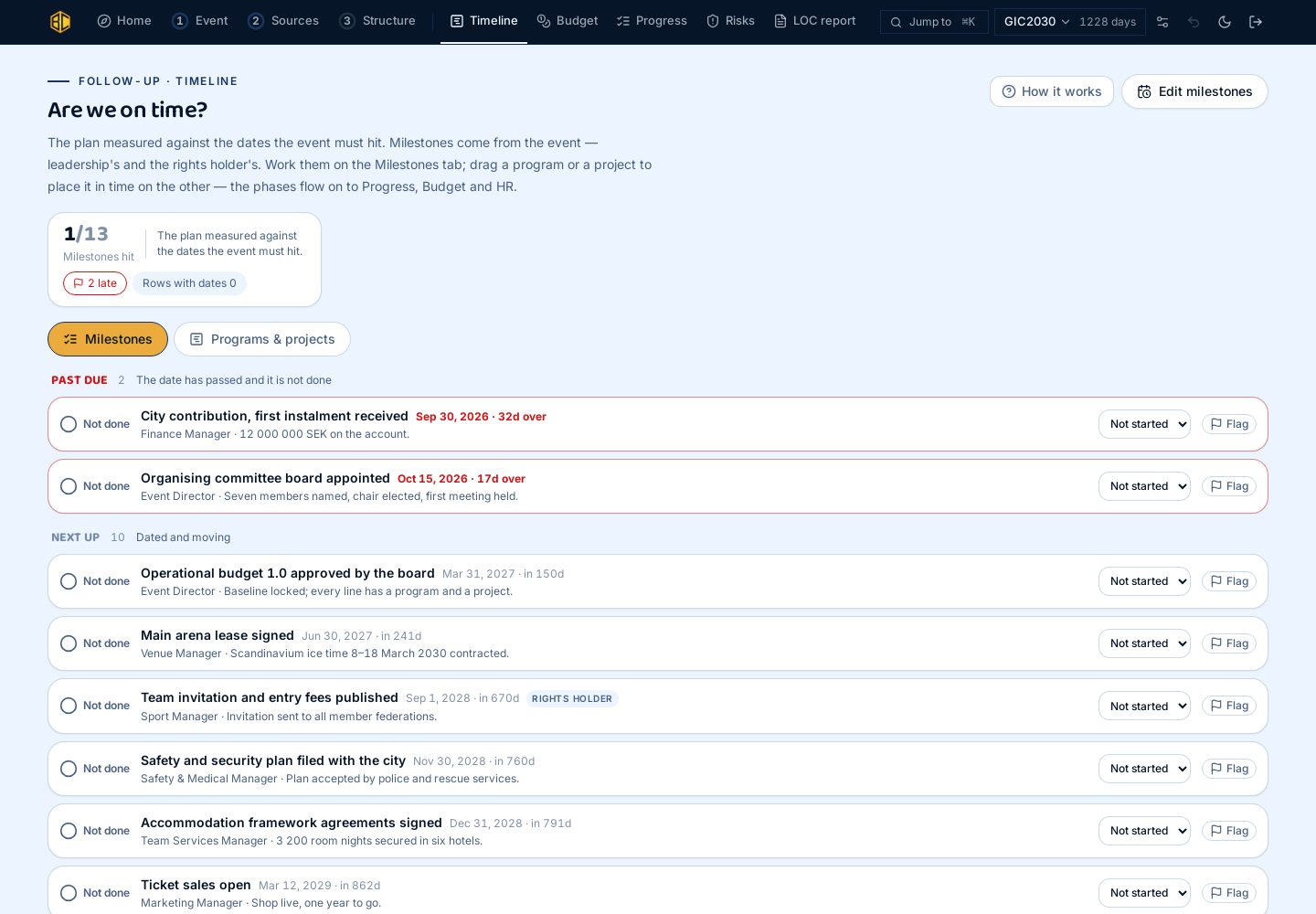
What is late? Are we on time? Are we on budget? What could go wrong, and what would it cost? Answered from the data the managers already keep.
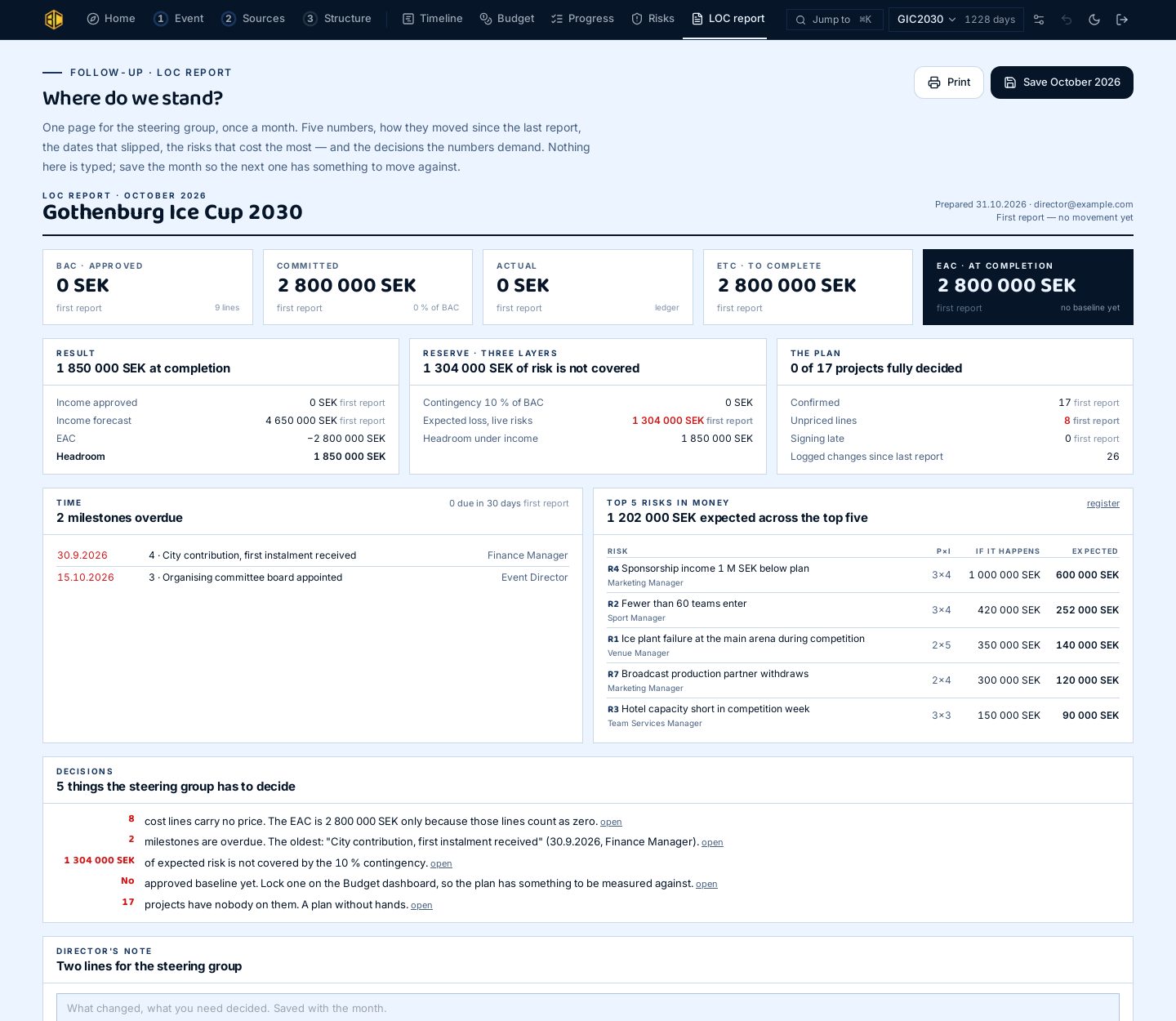
Approved, committed, spent, still to come, expected at completion. The dates that slipped. The risks in money. The decisions that need to be made.
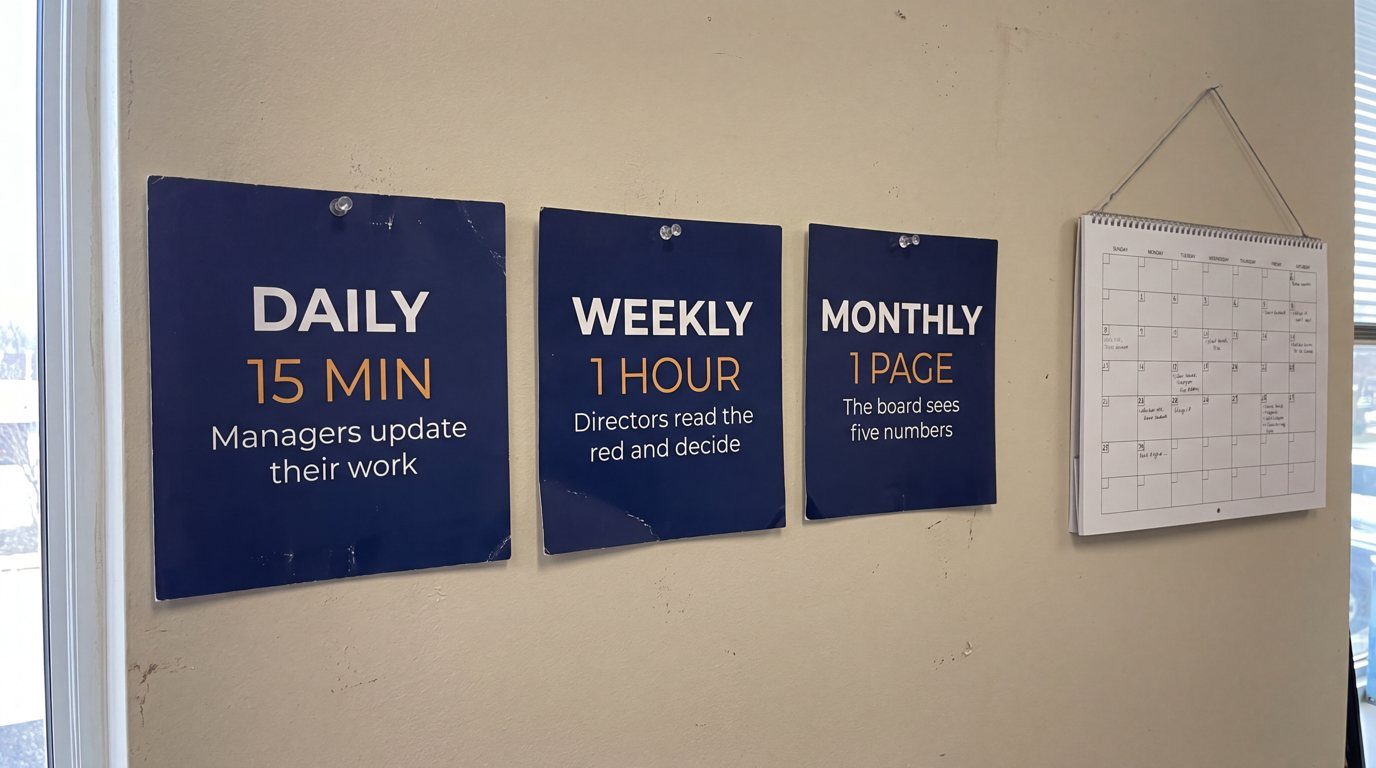
Managers update their work every day. Directors look at what is late and decide every week. The board reads five numbers once a month. Nobody has to put a report together by hand.
One shared plan for the whole event: work, owners, dates, money and risks. Every cost belongs to a project.
Is it worth doing?Your contracts, laws, strategy, key numbers and people. About two weeks of the director's time to set up. Then about 15 minutes a day per manager.
What does it take?A register where every row has a code, an owner, a source, a date and a budget line. Milestones. Risks with a response.
What do we get?Each week the leaders see what is late, what is signed, where the budget is heading and which risks are open.
What changes?The event delivers what the contracts, the law and the strategy require, on time and within the approved budget.
Why it matters
I am Jesse Kiuru. I was event director of the Lahti 2017 FIS Nordic World Ski Championships: 270,000 spectators, a workforce of 3,000, eleven days, NPS 88. It ran on spreadsheets for years, and it worked, but only when I was the one running it.
I have worked on both sides in Lahti: for the city, and inside the city's event company. Today I advise the Winter World Masters Games 2028 and the Nordic World Ski Championships 2029. Major Event OS is the system I use in that work.
One price per event, monthly, cancel any month. Three plans: the leadership team, the whole organisation, or the whole organisation with me working on your event every month.
The plans open after the twenty questions. Major Event OS is sold to leaders it fits, so the questions come first.
The system is built on one way of leading: sources first, owners named, status calculated, money counted on signing day. A leader who works another way would find it strict and work around it. The questions show you that before you pay, and you learn the method on the way.
Yes. After the questions, if the system fits, you can try it for seven days on your own event. A card is needed, and nothing is charged before day eight.
About two weeks of the director's time to set up the event, its sources and its structure. On Essentials the system reads your contracts and strategy and suggests the rows, which saves time. After set-up, each manager spends about 15 minutes a day.
Three things a spreadsheet does not do. Status is calculated from the plan, not typed in. A signed contract goes into the forecast the same day, and the forecast cannot drop below it. And every number in the monthly report traces back to a project with a named owner.
Everyone in the organisation. The price is per event, not per user. Managers see their own projects; the director sees all of them.
No. Accounting stays where it is. Major Event OS holds the event budget built from the projects, and the five numbers the steering group needs each month.
You define the baskets, the main areas of your event, yourself. The programs and projects come from your own contracts, laws and strategy. The structure is the same for every event; the content is yours.
You can export it to CSV at any time and print the report. Changing plans never deletes anything.

Two ways to start. Answer twenty questions and get a plain result, or book a 45-minute demo with Jesse on your own event.
Pricing starts at €497 a month.